Sunflowers are easy to love and surprisingly easy to misjudge. A packet labeled “sunflower” can produce a knee-high puffball for a balcony pot or a ten-foot stalk that shades the tomatoes. Height, color, branching habit, and seed size all change how a variety behaves in a home garden. The comparison below focuses on what matters before you sow: how tall it grows, what the flower looks like, whether it earns its space in the seed harvest, and where it fits best.
Start With Height: The Garden’s Structural Choice
Height is the first practical filter. A sunflower that looks modest in a nursery cell can become a small tree by August. Most garden varieties fall into three useful bands:
- Dwarf (roughly 1–3 feet): Sunspot, Teddy Bear, and similar compact types. Good for containers, front borders, and windy patios. They still need full sun and steady water.
- Mid-size (roughly 4–6 feet): Soraya, Moulin Rouge, Italian White, and many cut-flower types. Manageable in a mixed bed and easier to stake than giants.
- Tall (roughly 7–12 feet): Mammoth Grey Stripe, Russian Giant, Hopi Black Dye. Best at the back of a border, along a fence, or in a dedicated seed patch. They need shelter from strong wind and real support.
Don’t treat packet heights as promises. Rich soil, early sowing, and generous water push sunflowers toward their upper range. Poor soil and dry spells keep them shorter. If a tall variety is going into a small garden, plan the stake before the plant needs it. A single sturdy stake set at planting time is easier than rescuing a leaning stem later.
Color and Flower Form: Yellow Is Just the Beginning
Classic gold is only one option. Lemon Queen offers pale, soft yellow petals; Italian White brings a creamy, almost ivory look; Velvet Queen and Moulin Rouge go deep burgundy and red. Autumn Beauty produces a mix of warm tones on branching plants, so no two stems are quite the same. Double forms such as Teddy Bear look more like a golden pom-pom than a familiar sunflower face.
Flower form matters as much as color. Single, open flowers with a visible center are the best choice for bees and other pollinators. Double or heavily petaled types are ornamental first; they may offer little in the way of pollen and seed. Pollen-free varieties, often sold for cut flowers, keep tabletops and bouquets cleaner but are not the ones to plant for a pollinator patch. Branching varieties give you multiple stems over several weeks. Single-stem varieties give one big head, sometimes a magnificent one, and then the show is over. For a small garden, that trade-off is worth thinking through.
Seed Use: Not Every Sunflower Is a Snack
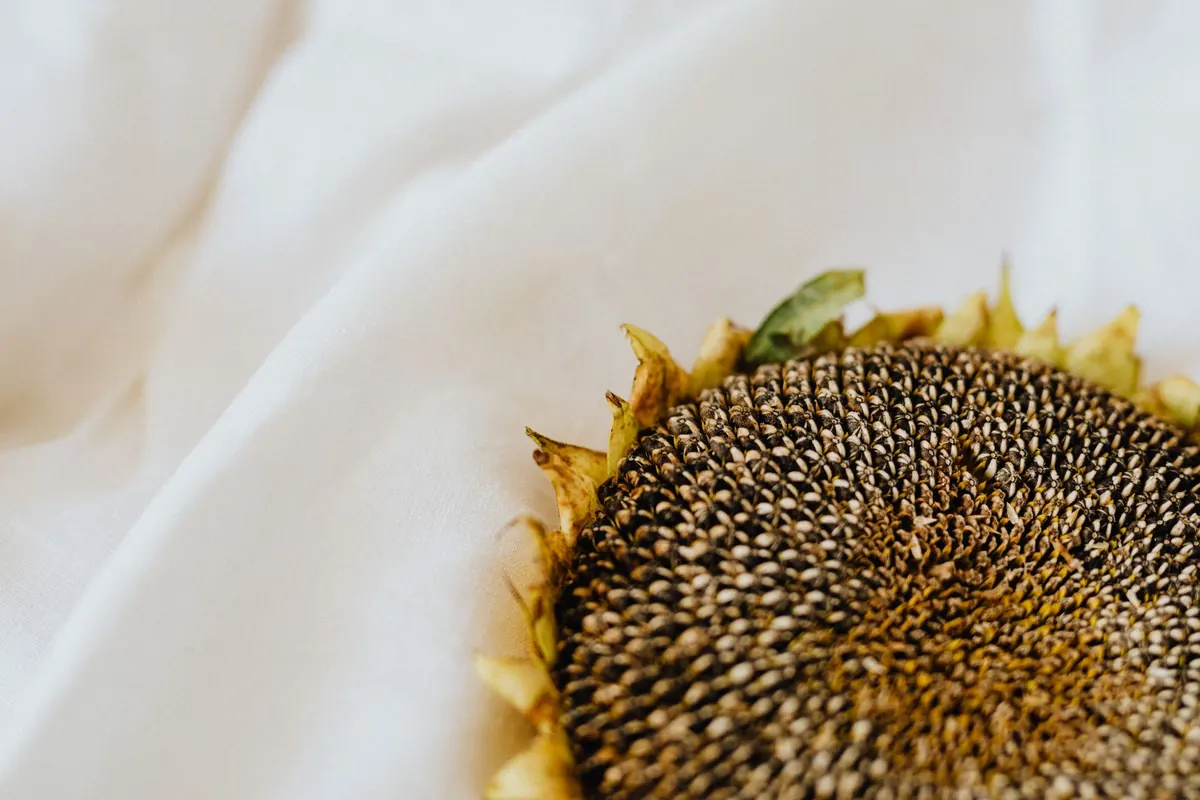
If you want to harvest seeds, start with large-headed, edible-seeded types. Mammoth Grey Stripe and Russian Giant are the familiar choices: tall plants, big gold flowers, and plump seeds that are worth the space if you have it. They need a long season and a sunny spot. Let the flower head mature until the back turns brown and the seeds feel full. Cover the head with a breathable bag or netting if birds move in first, and dry the seeds thoroughly before storing them.
Decorative varieties are grown for looks, not for a serious pantry crop. Teddy Bear and many pollen-free cut-flower sunflowers produce little worth harvesting. Hopi Black Dye is a useful multi-purpose type with dark seeds, traditionally used for dye and bird feed, but it is not the first choice for snacking. Black-oilseed types sold for birds are also better left to the birds. If you save seed from hybrids, expect variation; saved seed from open-pollinated varieties is more likely to come true, though sunflowers cross readily when several varieties bloom nearby.
Garden Fit: Matching Variety to Your Space and Routine
A sunflower’s best use depends on the garden you actually have. Here are practical matches:
- Containers and small patios: Sunspot, Teddy Bear, and other dwarf types. Use a pot with real weight, because a top-heavy sunflower catches wind. Full sun, consistent watering, and a single stake are usually enough.
- Mixed flower borders: Mid-size branching types such as Soraya or Moulin Rouge. They fit among perennials without dominating, and their multiple stems extend the bloom season.
- Cut-flower beds: Sunrich, ProCut, and similar pollen-free or long-stemmed types. Sow in small batches every two to three weeks for a longer harvest, and cut stems in the cool of the morning.
- Pollinator and bird gardens: Open single varieties such as Lemon Queen, Autumn Beauty, and Mammoth Grey Stripe. Leave spent heads standing for birds after the petals fade.
- Back-of-border drama: Tall heirloom types, planted with shelter from wind and staked early. Give them room; a giant sunflower in a crowded bed becomes a tangled stem.
Sunflowers want at least six to eight hours of direct sun. They tolerate many soils but do best in ground that drains and has some organic matter. Young plants need steady moisture; established tall plants need deep watering in dry spells. Direct sowing after the last frost is simpler than transplanting, since sunflowers resent root disturbance. Thin seedlings to the spacing on the packet, or a little wider for branching types.
A Few Reliable Varieties to Compare
Sunspot is the compact classic: about two to three feet tall, one large golden head, and a good fit for a child’s garden or a sunny pot. Teddy Bear stays similarly small but goes fluffy and double, with a soft golden look and little seed value. Lemon Queen is a branching mid-size plant with pale yellow petals; it is generous with flowers and useful for pollinators. Autumn Beauty adds warm bronze, rust, and gold on branching stems and suits a relaxed border. Velvet Queen brings deep burgundy-red flowers on tall stems, dramatic at the back of a bed and good for cutting. Mammoth Grey Stripe is the seed-harvest choice: tall, gold, and substantial, but it needs space and support.
How to Choose Without Overthinking
Pick two or three varieties rather than a dozen. One tall type for the back of a border or a seed patch. One dwarf for a pot or the front edge. One branching mid-size type for cut flowers and pollinators. That small mix gives you height, color, and usefulness without turning the garden into a sunflower maze. Read the packet for height and spacing, give the plants sun and water, and stake the tall ones before they ask. The best sunflower variety is the one that fits your space, your wind, and the reason you wanted to grow it in the first place.
Photo: Pexels / Pixabay